 Today · Tech Breaking
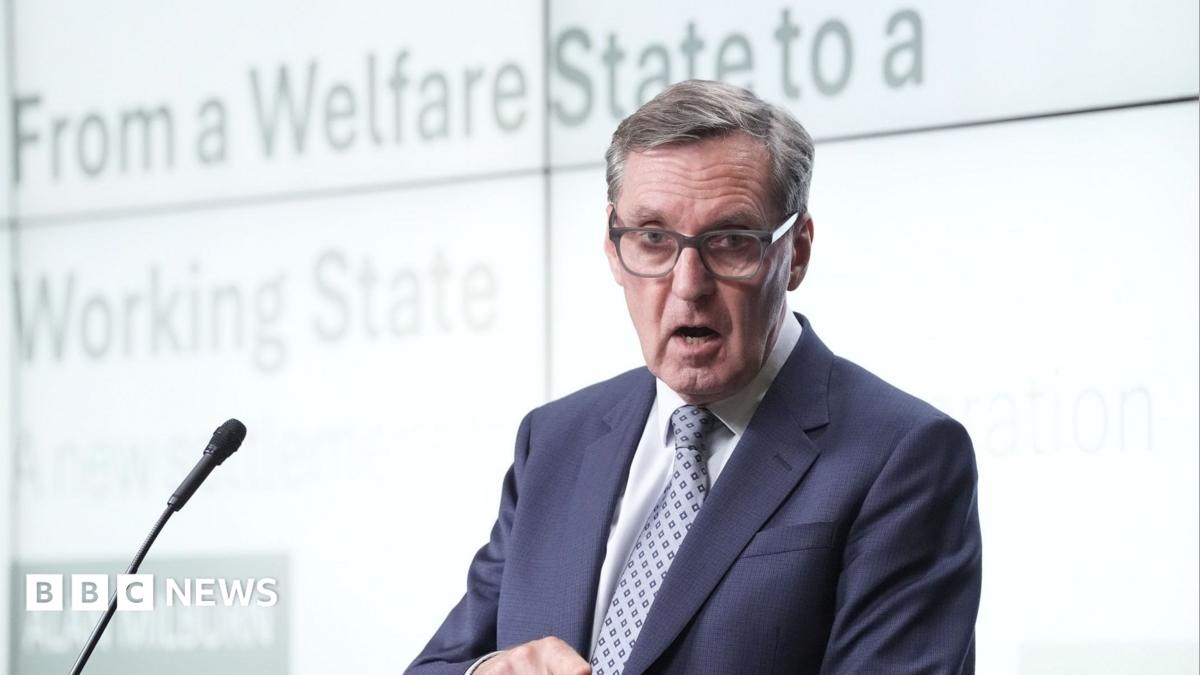
Image source, Press Association Image caption, In his report, Alan Milburn says the underlying causes of youth worklessness apply across the UK. By Economics and business editor, BBC News NI A sweeping review aimed at getting more young people into work has recommended reforms to tax, welfare and education. The focus is overwhelmingly on England, though important changes are likely to apply in Northern Ireland.
In his report, former Labour cabinet minister Alan Milburn says the underlying causes of youth worklessness apply across the UK. Even so, it takes nearly 200 pages before his 278-page report acknowledges that policy levers such as education, skills and health are devolved to Stormont. The report urges Stormont and the other devolved administrations to work with Westminster to settle on shared definitions, common targets and regular joint progress reviews.
Among the policy recommendations are an expansion of technical education, more apprenticeships and a single point of access for young people seeking help, called a Youth Opportunity Service. These will not automatically apply in Northern Ireland because further education colleges and health services are devolved. It is the proposed changes to tax and social security which could have a more immediate impact in Northern Ireland.
Taxation and national insurance still sit with Westminster, while Stormont normally maintains social security "parity" with Great Britain - meaning changes to benefit rules and employment support there carry direct financial and policy consequences. Parity means Stormont matches Westminster's benefit rates and eligibility criteria, and the system is funded directly from the Treasury. Stormont has the power to break parity, but if that increases the benefits bill, local ministers need to find the money from devolved budgets.
Parity has been broken in this way in the past, but would now be much harder to do given Stormont's financial woes. If Andy Burnham's government moves ahead with Milburn's proposals to overhaul health-related benefits for under-25s and replace GP fit notes with assessments by employment advisers or occupational therapists, the NI Executive has a choice: implement the Westminster reforms, or find millions of pounds from other services to pay for any local divergence or mitigation. Milburn's Stormont role Although Northern Ireland receives only passing attention in this review, Milburn is already directly engaged with the region's labour market problems.
Communities Minister Gordon Lyons has appointed him to chair an independent taskforce on "economic inactivity" in Northern Ireland - a wider issue than just young people. That work aims to build on a succession of Stormont initiatives that have struggled to shift Northern Ireland's stubbornly high inactivity rate. In 2015, the executive published Enabling Success, a cross-departmental plan aimed at tackling economic inactivity, alongside Pathways to Success, which focused specifically on young people.
Neither delivered a lasting breakthrough, partially undermined by repeated collapses of the power-sharing institutions. Image source, PA Media Image caption, Stormont's former employment minister Stephen Farry said the executive had previously made progress in helping young people Stormont's former employment minister Stephen Farry has said there was progress in helping young people. "Northern Ireland has been on its own journey on helping those young people not in employment, education and training (Neets)," he wrote on X.
"Neets figures peaked after the financial crash with a figure of 54,000. In 2012, I was successful in putting in place an executive strategy for Neets. "NI figures fell below 20,000 over the following years, only rising again after Covid.
"We have delivered on this in the past and can do so again. The question will be if and how the next executive can respond." Employer costs On the tax front, Milburn recommends doubling the earnings threshold at which employers start paying National Insurance on entry-level jobs for young workers in sectors such as retail and hospitality. With National Insurance set at Westminster, any cut in employer contributions would feed through automatically to businesses in Northern Ireland.
That is likely to be welcomed by local retail, hospitality and manufacturing groups who have been warning that rising payroll costs are deterring entry-level recruitment.
Source: BBC